You laid the patio three summers ago, stood back admiring the neat lines, and thought the job was done forever. Fast-forward to now, and those perfect joints have turned into miniature jungles. Dandelions poking through gaps, moss claiming every crevice, and what might be a small tree starting up near the garden steps. Sound familiar?
The battle against weeds between patio slabs is one every UK homeowner faces. The RHS weed identification guide can help you understand exactly what you are dealing with. Our damp climate and frequent rain create perfect growing conditions for unwanted plants. But here’s the thing — once you understand why weeds thrive in these gaps and implement the right prevention strategies, you can noticeably reduce the problem and keep your patio looking pristine with minimal ongoing effort.
Why Do Weeds Grow Between Patio Slabs?
Before diving into solutions, it helps to understand why your patio seems magnetically attractive to every seed in the neighbourhood. The gaps between slabs create sheltered microclimates where seeds can germinate protected from wind and foot traffic.
Water collects in these joints during rain, creating moist conditions that seeds love. Over time, organic matter — fallen leaves, soil blown in, decomposing plant material — accumulates in the gaps. This creates a growing medium rich enough to support plant life.
The type of bedding you used also matters enormously. Sand-based bedding, while traditional, provides excellent drainage for the legitimate plants trying to establish themselves. Mortar joints, when properly applied, create a much more hostile environment for weeds but require more skill to install correctly.
Your local microclimate plays a role too. Patios in dappled shade often develop moss problems, while those in full sun tend to attract drought-resistant weeds like plantain and dandelions.
The Three-Layer Defence System
The most effective approach to stopping weeds between patio slabs combines immediate removal, physical barriers, and ongoing maintenance. Think of it as building a fortress rather than fighting individual battles.
Layer 1: Complete Clearance Start with a clean slate. Remove every weed, moss patch, and organic debris from the joints. This includes scraping out the loose sand or mortar that’s been compromised by root growth. Half-measures here doom everything that follows.
Layer 2: Physical Barriers Install materials that prevent new growth while maintaining proper drainage. This might be polymeric sand, specialist compounds, or complete re-pointing with mortar.
Layer 3: Maintenance Regime Establish routines that catch problems early, before they establish deep root systems and become major headaches.

Method 1: Hand Tools and Elbow Grease
The most satisfying approach is also the most labour-intensive. Hand weeding gives you complete control and works brilliantly for smaller patios or as spot treatment for problem areas.
Essential Tools:
- Weeding knife or old bread knife — for cutting deep taproots
- Narrow trowel or painter’s scraper — for removing moss and cleaning joints
- Wire brush — for stubborn debris in textured surfaces
- Kneeling pad — your knees will thank you after the first hour
Start when the soil is slightly damp — after light rain or watering. Dry conditions make root removal nearly impossible, while waterlogged conditions create a muddy mess.
Work systematically across the patio rather than jumping around. Pull larger weeds by hand, ensuring you get the complete root system. For deep-rooted perennials like dandelions, use the knife to cut straight down alongside the root before pulling. Leaving root fragments virtually guarantees they’ll regrow stronger.
The satisfying aspect of hand weeding is seeing immediate, complete results. The downside is obvious — it’s time-consuming and needs repeating throughout the growing season. Budget about 2-3 hours for a typical 4×4 metre patio, plus follow-up sessions every 4-6 weeks during spring and summer.
Method 2: Chemical Solutions
Chemical weedkillers offer efficiency for larger areas but require careful application and consideration of environmental impact. In the UK, glyphosate-based products remain available for domestic use, though regulations continue evolving.
Selective vs Non-Selective For patio joints, you need non-selective weedkillers that kill everything they touch. Selective herbicides designed for lawns won’t tackle the diverse range of plants that establish in paving gaps.
Application Technique Apply during dry, still conditions when rain isn’t forecast for at least 6 hours. Many people make the mistake of applying too dilute a solution — follow manufacturer instructions precisely. Stronger isn’t always better, but weak solutions often prove ineffective.
Use a watering can with a dribble bar attachment rather than a spray for precise application between slabs. This prevents drift onto nearby plants you want to keep. For stubborn individual weeds, consider gel formulations that stick to leaves rather than running off into the soil.
Once your patio maintenance is sorted, keeping your garden furniture clean and well-maintained ensures the whole outdoor space looks its best throughout the season.
Timing Matters Early morning application often works best. Weeds are actively growing and uptaking water, while conditions are typically still and less likely to harm beneficial insects going about their business.
Chemical control works fastest on young, actively growing weeds. Established perennials might need two applications, 2-3 weeks apart, to completely eliminate the root system.
Method 3: Natural Alternatives
If you prefer avoiding synthetic chemicals, several natural approaches can in practice control weeds between patio slabs.
Boiling Water The simplest method costs nothing beyond the energy to boil a kettle. Pour boiling water directly onto weeds, saturating the root zone. This works particularly well on young growth and annual weeds. Established perennials might need repeated treatments.
The limitation is obvious — you need large quantities of boiling water for significant areas, and the effect is purely immediate. It doesn’t provide residual control like chemical options.
White Vinegar Solution Household white vinegar (around 5% acetic acid) can damage weed foliage when applied on sunny days. For better results, use horticultural vinegar with 20% acetic acid content, available from garden centres.
Mix with a small amount of washing-up liquid to help the solution stick to waxy leaves. Apply during warm, sunny weather for maximum effectiveness. Like boiling water, this primarily affects foliage rather than deep root systems.
Corn Gluten Meal This acts as a pre-emergent herbicide, preventing seeds from germinating rather than killing established plants. Apply in early spring before weed seeds germinate for best results.
The downside is timing dependence and higher cost compared to conventional alternatives. It also needs dry conditions after application, which isn’t guaranteed in UK spring weather.
Long-Term Prevention: Physical Barriers
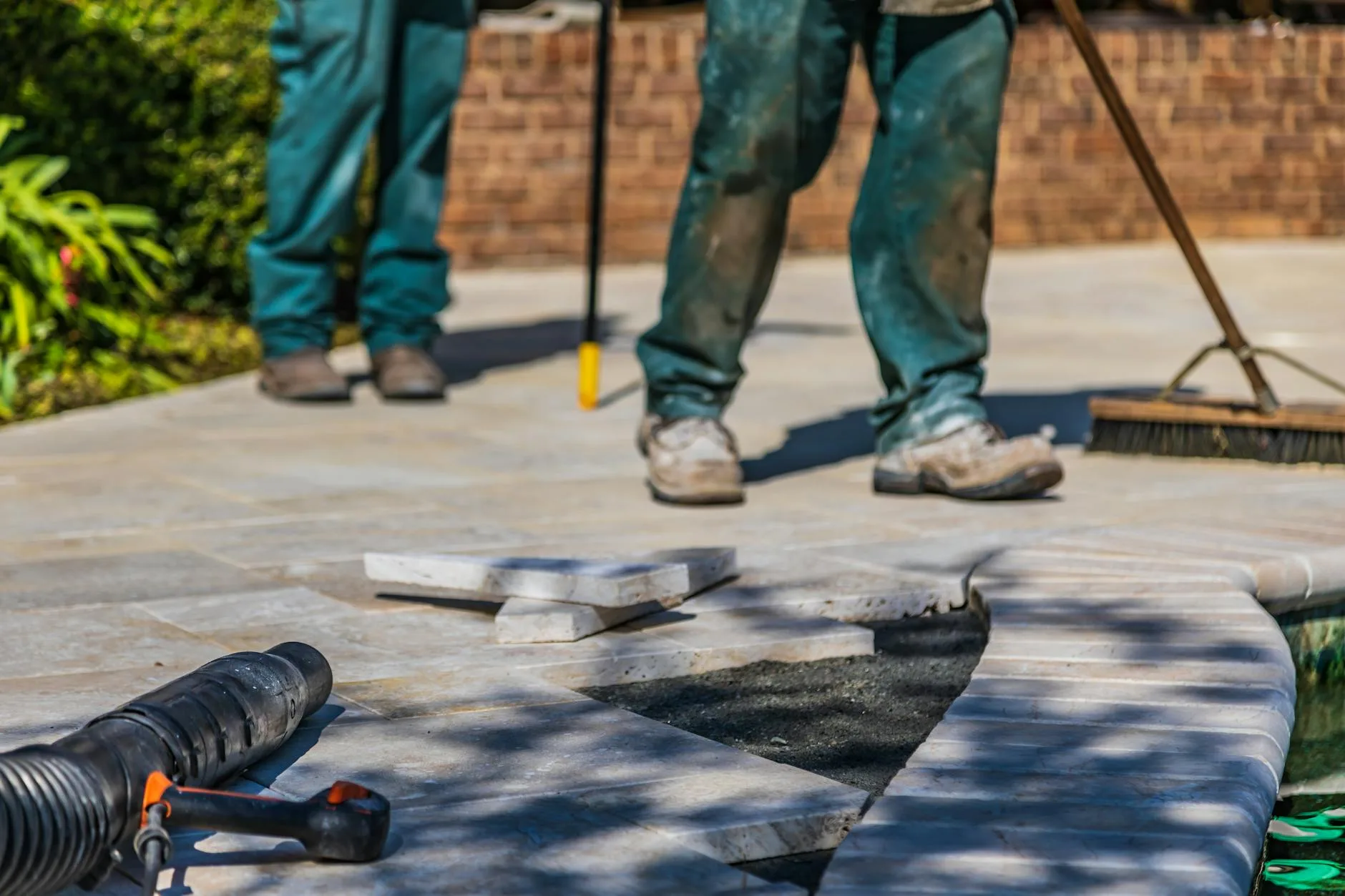
Once you’ve cleared existing weeds, installing physical barriers provides the most reliable long-term solution to stop new growth.
Polymeric Sand This represents the sweet spot between effectiveness and ease of application for most situations. Polymeric sand contains binding agents that create a semi-flexible joint when wetted and cured.
Clean out existing joint material completely, then sweep polymeric sand into gaps until flush with the paving surface. Use a plate vibrator or hand tamper to settle the sand, then wet gently with a fine spray. The sand forms a barrier that inhibits weed growth while allowing water drainage.
Expect to pay £15-25 per 20kg bag, which typically covers about 10-15 square metres depending on joint width. Brands like Geofix and EasyJoint are readily available from Wickes, B&Q, and specialist paving suppliers.
Mortar Pointing For a permanent solution, consider re-pointing joints with proper mortar. This requires more skill but creates an almost impenetrable barrier when done correctly.
Use a 3:1 sand-cement mix with plasticiser for flexibility. Clean joints thoroughly, wet them down, then press mortar firmly into place. Finish with a pointing trowel for neat, consistent appearance.
This approach suits formal patios where the aesthetic matters as much as weed prevention. The downside is cost (professional pointing costs £8-15 per square metre) and reduced drainage compared to sand-based systems.
Geotextile Membrane For new installations or complete patio renovations, installing geotextile membrane beneath the bedding layer prevents weed growth from below while allowing water drainage.
This won’t help with airborne seeds settling in surface joints, but eliminates the frustrating situation where established weeds push up through the paving from underneath.
Specialist Products and Tools
The market offers numerous products specifically designed for patio maintenance, some more effective than others.
Pressure Washers A decent pressure washer makes joint cleaning noticeably easier. Look for models with 130+ bar pressure and rotating nozzles. Kärcher K4 or similar (around £150-200 from Currys or Amazon UK) handles domestic patio cleaning in practice.
Use lower pressure settings on pointed mortar joints to avoid damage. The water volume matters as much as pressure for shifting stubborn debris from joints.
Patio Joint Sealers Products like Thompson’s WaterSeal Patio & Block Paving Sealer claim to prevent weed growth while protecting the surface. Applied annually, these create a barrier that discourages seed germination.
Results vary depending on paving type and local conditions. They work best as part of a thorough maintenance approach rather than standalone solutions.
Weed Burners Gas-powered weed burners (£30-60 from screwfix or garden centres) offer chemical-free control for larger areas. They work by rupturing cell walls in plant tissue rather than setting things on fire.
Most effective on young growth in dry conditions. Take obvious fire safety precautions, especially near fences, sheds, or drought-stressed planting.
Common Mistakes to Avoid
After helping countless customers tackle patio weed problems, certain mistakes crop up repeatedly.
Insufficient Initial Clearance The biggest mistake is treating symptoms rather than causes. Pulling visible weeds while leaving root systems and organic debris guarantees rapid regrowth. Proper joint preparation takes time but provides the foundation for everything that follows.
Wrong Product for the Situation Using lawn weedkillers on patio weeds rarely works well. Similarly, applying selective herbicides when you need total vegetation control wastes time and money.
Poor Timing Applying treatments during inactive growth periods or immediately before rain reduces effectiveness noticeably. Most weed control works best during active growing periods in dry conditions.
Inadequate Follow-Up Even the best initial treatment needs ongoing maintenance. Leaving things for entire seasons allows problems to re-establish and undo previous good work.
Seasonal Maintenance Schedule
Developing a routine prevents small problems becoming major headaches.
Spring (March-May)
- Complete thorough clearance of all joints
- Apply pre-emergent treatments if using
- Re-point or re-sand joints as needed
- First herbicide application for established weeds
Summer (June-August)
- Monthly spot checks for new growth
- Quick removal of seedlings before they establish
- Second herbicide application if needed
- Pressure wash if using this approach
Autumn (September-November)
- Remove fallen leaves promptly to prevent organic matter accumulation
- Final weed control before winter dormancy
- Apply any annual protective treatments
Winter (December-February)
- Plan any major renovations or changes to approach
- Order materials for spring operations
- Minimal intervention unless weather allows
When to Call Professionals
Most patio weed problems fall within DIY capabilities, but certain situations benefit from professional intervention.
Consider professional help for:
- Complete patio re-pointing or re-laying
- Extensive moss problems indicating drainage issues
- Large areas where time investment becomes impractical
- Situations where underlying construction problems need addressing
If you’re dealing with a complete patio overhaul, it’s worth considering broader garden design principles. Our guide on how to plan a garden layout can help ensure your newly maintained patio fits seamlessly into your overall outdoor vision.
Expect to pay £8-15 per square metre for professional re-pointing, or £3-6 per square metre for thorough cleaning and maintenance services.
Prevention vs Treatment: Cost Analysis
Understanding the economics helps decide which approach makes sense for your situation.
Hand Weeding
- Initial cost: £20-40 for basic tools
- Ongoing cost: Your time (2-3 hours per quarter for average patio)
- Effectiveness: High for small areas, becomes impractical for large spaces
Chemical Control
- Initial cost: £8-15 per application for average patio
- Ongoing cost: 2-3 applications per season
- Effectiveness: High for broad control, less satisfying than hand removal
Physical Barriers
- Initial cost: £50-150 for polymeric sand system
- Ongoing cost: Minimal beyond occasional top-ups
- Effectiveness: Highest long-term value for most situations
Professional Services
- Initial cost: £200-600 for complete renovation
- Ongoing cost: £100-200 annual maintenance
- Effectiveness: Highest for large or complex situations
Troubleshooting Common Problems
Moss Dominates Despite Treatment This usually indicates drainage or shade issues rather than treatment failure. Improve drainage around the patio and consider selective tree pruning to increase light levels.
Weeds Return Quickly After Removal Insufficient root removal or failure to address seed sources. Look for nearby plants dropping seeds and ensure complete root system removal during hand weeding.
Joint Material Keeps Washing Out Usually indicates inadequate compaction during installation or inappropriate material for the drainage conditions. Consider switching to polymeric sand or professional re-pointing.
Chemical Treatments Seem Ineffective Check application timing, weather conditions, and product selection. Many failures result from applying too-weak solutions during suboptimal conditions.
The Best Overall Strategy
For most UK patios, the winning combination involves initial thorough clearance, installation of polymeric sand barriers, and quarterly maintenance checks with spot treatment as needed.
This approach balances effectiveness, cost, and time investment while providing genuine long-term results. The initial investment in proper clearance and physical barriers pays dividends through reduced ongoing maintenance requirements.
Remember that stopping weeds between patio slabs isn’t about winning once — it’s about creating conditions where problems can’t re-establish. Focus on prevention through proper barriers and catch issues early through regular inspection.
Your patio can look as good as the day it was laid, but only if you’re willing to invest in proper prevention rather than fighting the same battles repeatedly. Once you’ve conquered the weed problem, you might want to consider how to choose the right size dining set for your patio to make the most of your newly pristine outdoor space.
The choice is yours: spend fifteen minutes every few weeks maintaining barriers, or spend entire weekends every season fighting the same weeds that just won’t stay gone.
Keep reading on Plot & Patio: Patio Materials Compared: Concrete, Stone, Porcelain & Composite, How to Lay a Patio: Step-by-Step DIY Guide, Best Pressure Washers 2026 UK: Patio, Car & Decking, Pergolas vs Gazebos: Which Is Right for Your Garden?.
Frequently Asked Questions
Q: How often should I treat weeds between patio slabs? A: With proper barriers in place, quarterly spot checks should suffice. Without barriers, expect monthly attention during growing season (April-October). Early intervention prevents small problems becoming major headaches.
Q: Is it safe to use weedkiller around pets and children? A: Follow manufacturer guidelines strictly. Most glyphosate-based products are safe once dried, typically 2-6 hours after application. Consider natural alternatives like boiling water or vinegar if you prefer avoiding synthetic chemicals entirely.
Q: Will pressure washing damage my patio? A: Pressure washing at appropriate settings won’t damage properly installed patios. Use 130-150 bar pressure with wide-angle nozzles on most surfaces. Avoid high pressure on old pointing or loose slabs.
Q: Can I prevent weeds without using chemicals? A: completely. Physical barriers like polymeric sand or proper mortar pointing provide excellent long-term control. Hand weeding combined with boiling water or vinegar treatments offers chemical-free alternatives for ongoing maintenance.
Q: Why do weeds grow more in some areas of my patio? A: Microclimates vary across your patio. Shaded, damp areas near guttering or garden borders typically see more growth. Areas with compromised joints or underlying organic matter also provide better growing conditions for weeds.